Yogurt. hrmph.
Category: dribblings
I’m not a fan of yogurt. It has a chemical taste to me. If I have to eat it I’ll pick the kind with fruit stuck on the bottom because hey, fruit. But mostly, I can go for multiple years at a time without buying/eating yogurt.
I know they sell yogurt to women, and they try to sell it to women with bowel issues. And I’ve always has some of those issues, but it’s always been the opposite of the issues that the yogurt women have. Are you following this? I’m trying not to be all, “I poop a lot! Every day!” But there you go. Now you know. The poop’s out of the bag now.
However! Now that I’m on this gluten-free diet, and I’m eating way more protien, THINGS HAVE SLOWED DOWN. And probably not in a bad way, but it’s in a way I’m not used to yet. So I thought, “Hey, I’m a 30-something woman. I should eat a yogurt.” So I thought maybe I should try that Greek yogurt that everyone tries once and never eats again.
Let’s do it!
So I bought the Fage brand (pronounced: fa-yeh!) (according to the label. exclaimation point and all.) because it came with a tiny pot of honey. It seemed adorable at the time.
I had heard that Greek yogurt was different, but to me that could only be a good thing. The first thing I did when I opened it was to eat a spoonful of it on it’s own without the honey. Okay, the thing about this yogurt is that it tastes like an ingredient.
You know how you don’t eat sour cream by itself, but if you add it to food or put it on finished food it makes things taste better? I’m pretty sure that’s what this yogurt is for. You could make delicious dips with it, but on it’s own, it’s like eating stiff sour cream.
Then I tried it with the honey, and I’ll admit, the sweetness really helped choke it down. Also, either there was a ton of yogurt packed into that tub or that stuff grows as you eat it, because it was The Snack That Wouldn’t End. It was actually part of my lunch, I had a small salad and that yogurt. Then my stomach was really uncomfortable for a couple of hours. I did not notice an improvement with the bowels, but I know, I’ve seen the commercials. They want you to eat yogurt for two weeks.
I’m not going to do that.
Will I try Fage again? Yes. But only because I bought two of them. They are kinda pricey.
1 Comment | PermalinkTags: gluten-free
14. In the Garden of the Beasts: Love, Terror, and an American Family in Hitler’s Berlin by Erik Larson
Category: 50 Books
In this work of nonfiction Larson tells about the American ambassador to Berlin, William Dodd, and his family as they live in Nazi Germany from 1933 to 1936. The book is mostly about their first year in Berlin, and how much Germany changed in that one year.
The whole book is fascinating. I couldn’t put it down.
Dodd’s story was interesting, he wasn’t a typical diplomat; he was a history professor. So it was interesting to see how this normal person handled this very political position. But the person who really stole the show, who really had the most interesting time in Berlin (and apparently even after) was Dodd’s daughter, Martha. Martha Dodd was educated, slightly spoiled, slightly slutty, very independent-minded. I thought she had very American responses to the things she witnessed. And she was almost progressive when it came to relationships with men. She didn’t care if they were German or Russian or what, she just liked the guys she liked, and they all fell in love with her.
As the book goes on and you realize that the United States isn’t going to step in anytime soon, you start to read through your fingers, trying to hide your eyes from the hindsight you already know about. The book is absolutely great, and Larson’s writing is so readable, the story flows the whole time; there’s not a single boring chapter. It was fascinating from start to finish.
If you’re wanting to read about book about Nazi Germany but you’re afraid to start one because they are all gigantic books that seem too daunting to even pick up, try this one, but make sure you have the time to read it because you won’t be able to out it down.
Leave a Comment | PermalinkTags: 50 books, Erik Larson, nonfiction
Has it already been two weeks?
I’m still eating lots of veggies. My breakfast is still a hard-boiled egg. It’s not glamorous but it gets the job done. This week I’ve eaten a lot of cherries. They were on sale and I had never had a cherry before. How that happened I have no idea. But if I had known that they are like tiny plums I would have been all over them years ago. My love for plums is ridiculous, but the plums, they don’t love me. Actually, the plums have a healthy attitude toward me. I’m the one with the problem. If I buy a bag of plums I will eat them all in one sitting. And then terrible things happen.
It’s a compulsion. I can’t not eat all the plums.
I’m finding the same thing goes for the cherries, only so far I haven’t eaten them all (and I’ve tried. I just get too full.) and so far there’s been no problems.
Okay, fine. The first day there were problems. But now, I’ve learned to not eat 30 cherries on an empty stomach.
I did make a delicious meal this evening and I want to share it with you because it was so damn tasty.
Spaghetti, is basically what I made.
For the sauce it went like this:
I put olive oil in a pan. Diced up half an onion and half a green bell pepper and put that in the pan. put some salt and pepper on it. then I added two pieces of roasted red bell pepper that i had in a jar from the store (I think it was Alessi brand) cut those up and put them in the pan. Then I added a jar of Classico brand spaghetti sauce as it is gluten-free. Cut up a handful of pitted kalamata olives and threw them in the sauce as well.
for the “pasta” I peeled zucchini and then used the veggie peeler to shave off strips of the zuke. (stop when you get to the seeds). you basically need one zuke per person. Then in a separate pan from the sauce I added some oil and chopped garlic and got that hot. Then threw in the zucchini and as well as 2 table spoons of pesto. tossed it while it cooked for a minute (you’re basically stir-frying the “noodles”.
It kind of looked like cooked cabbage when I put in on the plate. I topped it with the sauce and some shredded parm. I was really surprised at how TOTALLY AMAZING it was. I served it with a salad, because I’m classy that way.
Not only was it gluten-free, but vegetarian as well.
5 Comments | PermalinkTags: cooking, gluten-free
Okay we all know I’m a sucker for Scandinavian crime fiction, but bear with me. This one was terrific. Better than The Girl Who… books, and I’ll tell you why:
1. The characters were better.
2. The computers in this story acted like normal computers.
3. It was good fiction that did not call on my suspension of disbelief.
4. No anal rape.
Wins all across the board. On with the review:
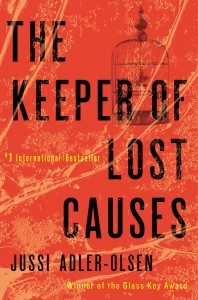
The Keeper of Lost Causes is the first book in the Department Q series written by Danish author, Jussi Adler-Olsen. It is so great that I want all my friends to read it so we can talk about it!
It’s suspenseful crime fiction at it’s best. The main character, Carl, is a veteran detective on the Copenhagen police force. Certain tragic events happen and he’s put in charge of Department Q, which is a way for the police force to get rid of Carl without actually getting rid of him. He’s basically put in charge of cold cases and his new office is the basement at the police station.
Carl is written perfectly. Of course he’s a bitter, old detective with a sad home life. That’s how we like our detectives. I mean, a detective that’s cheery and well-adjusted? Has anyone written a story like that? No. That would be boring. The great thing about Carl is that while he’s surly and bitter, he also has a sense of humor and doesn’t really take himself too seriously. It’s a perfect blend that has you rooting for Carl the whole way.
All of the characters are written well. They are fleshed out and seem very realistic. As the story moves forward you are given details here and there about the characters in such clever ways that you learn more about them without being bogged down with loads of back story. Specifically with Assad, Carl’s new assistant at Department Q. He starts out as the janitor and eventually helps Carl solve the case. Their relationship is funny, and it could have been played out in a “Let’s put the old, white man and the foreigner together” lazy kind of way, but thankfully, the relationship is not exploited like that. There’s a mutual respect that happens. It was refreshing.
The cold case that they investigate involves a parliament member, Merete Lynggaard, who went missing five years before. Her part of the story was so tragic and terrifying, that while I was sitting in a comfortable chair and reading it, I felt totally claustrophobic. My stomach was in knots. Talk about amazing suspense writing.
The Keeper of Lost Causes is the kind of suspense novel that has you on the edge so hard that all you want is to put the book down and take a break, but you can’t because you have to know what happens next.
I very much look forward to books 2 and 3.
This book is available August 18, 2011 from Penguin Group
2 Comments | Permalink
Tags: fiction, Jussi Adler-Olsen, Scandinavian crime fiction
Happy Anniversary, Atomic Age? Plus a book review of Bradford Morrow’s Trinity Fields.
Category: 50 Books
On July 16, 1945 the United States tested it’s first atomic weapon at Trinity Site in the desert in New Mexico. The “gadget”, as it was called, was detonated at 5:29:45 (Mountain War Time) . The explosion caused the desert sand to crater and become radioactive green glass, which they named Trinitite. There were reports of people hearing the explosion and windows rattling up to 200 miles away from the blast site. The gadget had a blast equivalent to 18 kilotons of TNT. Merely weeks later (August 6th and 9th) we dropped atomic bombs on Hiroshima and Nagasaki, Japan. Days later Japan surrendered.
On December 21, 1965 the Trinity Site was declared a National Historic Landmark. The site is only open to the public twice a year, on the first Saturdays in April and October. More than sixty years later, an hour long visit to the site is equal to half the radiation you’d get on a normal day.
All of that info was taken from Wikipedia.org. So it must be true!
Trinity Fields by Bradford Morrow
Morrow’s novel tells the story of two boys, Bryce and Kip, who grow up in Los Alamos, New Mexico, sons of scientists working on the atomic bomb during the 1940s and ‘50s. They grow up closer than brothers, and when they go off to college in the 1960s, Vietnam comes along and changes their friendship.
The book is in two parts. The first part is mostly flashbacks of Bryce and Kip growing up in New Mexico and is in Bryce’s first person point of view. The second part still has a lot of Bryce’s first person in it, but it adds to it some of Kip’s story in the third person about his tours in Vietnam and his living in Laos.
The book was great and very well-written. There are times when I thought the book was getting too verbose, but the author does two things I love:
1. The sentences are so well-written they flow in a rhythm and
2. Most of the wordy parts were when the author was describing the landscape of New Mexico. After several pages of this I realized that he was using the landscape as another character, and I’ll admit, I’m a sucker for that every time. It was amazing how at times, he could make the desert seem like a dry, arid nothing, and then come back and paint it as a paradise for the boys to run to make their escape.
The book jumps around in time quite a bit, but it was not hard to follow. The only thing I really had trouble with was figuring out the characters’ ages at different times, and I was never sure what year the present was. This could have just been me not paying attention because honestly, I was sucked into the story and kept wanting to find out what was going to happen next that I did get lazy with my note taking.
I enjoyed this book immensely, but I think I’m one generation off from really enjoying the fullness and scope of the whole novel. If you’re a Baby Boomer, you’d probably get even more out of the book than I did. My favorite part of the book was in the first part where Bryce and Kip run away to an old adobe church in the desert to try to atone for their fathers’ sins of bringing on the Atomic Age. My heart ached for those boys who grew up thinking that their fathers were heroes working on a project that would end war, and then coming to the conclusion that what they actually did was make a terrible weapon that killed hundreds of thousands of people. The boys couldn’t reconcile. And that’s a universal idea, especially in the U.S. I think, most children probably do think their parents are perfect and infallible, and then as they get older realize that no, they’re not those things, not by a long shot. And how do you deal with that? What do you do with your life to make yourself better? the world better?
In Trinity Fields Bradford Morrow does an amazing job of showing the subtleties of guilt and innocence in young and old, how close they are, and the affects of both during a lifetime.
****
Small disclaimer: I was asked to do a review of Mr. Morrow’s book by e-publisher, Open Road Integrated Media, who have recently added Trinity Fields to the e-reader realm of book publishing. This review is my free and honest opinion.
Leave a Comment | Permalink
Tags: books, Bradford Morrow
Gluten-free Day 6
Category: dribblings
Breakfast is still difficult. I finally managed to make some hard-boiled eggs. I used the easy way and then cooled the eggs with cold water a couple of times. The shell peeled away nicely.
Lunch and dinner so far this week have been different salads, and dad made some antipasta that was out of this world. I’ve eaten on it for two meals. He just cut up a ton of veggies (cucumber, green pepper, banana pepper, I think there was some okra?, tomato, I’m sure I’m forgetting something, parm cheese, pepperoni, and some Italian dressing. I added some big chunks of mozzerella cheese and half a packet of that salmon (in the foil packs?), it was awesomely fresh tasting.
If you grow fresh basil and haven’t made a Caprese salad, I suggest you do so. I didn’t make it with slices of cheese and tomatoes. I cut them up. So it wasn’t as pretty as the pictures, but it was good and surprisingly filling. I figured I’d be hungry an hour later, but I guess the cheese fills you up.
With all of the raw veggies I’ve been eating every day at every meal I figured my stomach would be giving me fits. But no. I’ve been fine. Even the green peppers haven’t bugged me.
Suck it, gluten.
9 Comments | Permalink
Tags: gluten-free
Record Collecting For Girls: Unleasing Your Inner Music Nerd, One Album at a Time by Courtney E. Smith
Category: 50 Books
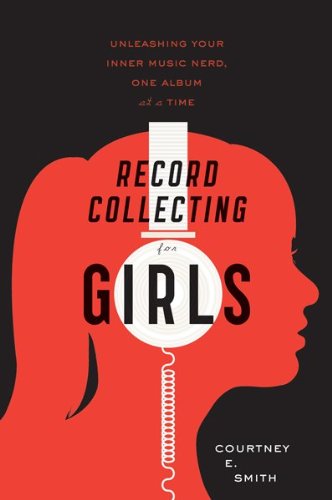
Record Collecting For Girls comes out September 6, 2011
The title makes it sound like this book is a music guide for girls. It is not. It reads more like a memoir about her history with music as well as some general music history thrown in.
There were two parts of the book that I thought were very clever. One is that she has a playlist at the end of each chapter with all the the groups and songs she mentions in the chapter. That was a neat idea. The last chapter had this really great Choose Your Own Adventure style of how to find music that is similar to music you like. It was smart and witty.
There are two or three solid chapters in this book, but the rest of it I can’t figure out. I’m also not sure who this book is for. If it is for girls, as the title implies, then I’d think it’s geared for teens and maybe women in their early twenties.
I’m fairly certain that the author and I are the same age. Yet throughout the book she keeps talking about having crushes on boys. There comes a time when you stop referring to men or guys as boys. By using the word boys instead of men (or guys or dudes since we’re going informal here) one implies that the men are immature for their age. That’s fine. But if you keep calling men who are roughly the same age as you boys, that shows a level of disrespect (or creepiness). This author uses the word boys so much that it’s distracting. I can’t tell if she’s calling all of her boyfriends boys because she thinks they were/are immature or if she’s calling them that out of some kind of disrespect for males. I don’t think it’s the latter because she seems to very much like guys. So it might be that she just has a habit of either dating immature guys or overusing the word boys instead of men or guys. A good friend or proofreader/editor could help her with this.
Another thing that was distracting was she admits she’s a music nerd and a music snob, and the book touts that she’s bringing a “female perspective” to music, but her music snobbery and the music snobbery of the “boys” she’s trying to impress/date/whatever, is the same music snobbery. She’s acting just like the guys. She’s judging and hating the music she doesn’t like. I don’t see how this is a female perspective.
In the chapter Guilty Pleasures, Ms. Smith hates on the Black Eyed Peas and judges others for liking them, then turns around and says she likes The Pussycat Dolls, but that’s okay because they are her guilty pleasure. She also says that if someone is proud of all the music they own (meaning they don’t have a group/singer they feel ashamed of liking) that that person is either ignorant about music or they are a “pompous ass.” As a 33 year old woman who does not particularly care for country music, I have to say that I’m not particularly proud of the amount of Glen Campbell songs on my iPod, but I also don’t feel the need to defend them to anyone. Why this would make me ignorant or an ass, I have no idea.
I think some of the individual chapters would have made really good magazine articles or something, but the book as a whole just doesn’t really accomplish anything. If this book is for twenty-somethings and teen girls, I wish the author would have been more about building up confidence in liking what you like, and not so much about stalking guys with similar music interests and trying to impress them with musical knowledge. I wish there really had been a female perspective instead of the if-you-can’t-beat-’em-join-’em vibe the book had.

2 Comments | Permalink
Tags: biography, books, music, nonfiction
Wheat Belly by William Davis, MD
Category: 50 Books
My husband decided to go wheat/gluten-free over a year ago. I didn’t get it. He was never diagnosed with Celiac Disease nor an allergy to wheat. I was kind of mad about it because it seemed to be terribly limiting food-wise. Not only was it inconvenient, but it was more expensive because it pretty much means you can’t have any processed foods. Everyone knows that processed foods aren’t good for you, but they are cheap and convenient.
We both work and have different schedules so the only meal it really affected was dinner. I adapted and learned how to make some gluten-free meals. It wasn’t difficult, it just involved a little more planning. The only real hassle was that we couldn’t go out to eat together, and if we were invited to dinner with friends we’d usually decline because of menu issues. Eventually we figured out more things he could eat, and our friends, who are awesome, learned what things he could eat and now it’s not a big deal at all.
I had seen some gluten-free cookbooks and books on Celiac Disease, but there didn’t seem to be anything on just a wheat-free lifestyle. The cookbooks were a disaster because there was nothing easy about the recipes (many strange and expensive ingredients). I ran across this book, Wheat Belly, which seemed exactly what I needed to read. It was a diet book, sure, but more than that it approached the wheat/gluten-free diet as more of a lifestyle, much like vegetarianism.
I’m so glad I read this book. Dr. Davis explains why the wheat we eat today is different from the wheat we ate 60 years ago. He goes back as far as ancient, wild wheat all the way up to the wheat we hybridize today. I found this history of wheat extremely interesting. In fact, I found that part of the book more useful than the parts where he would talk about his patients (he’s a cardiologist) coming to him to get healthier, him adjusting their diet to no wheat, and them getting better, feeling better, and becoming more healthy. Not that the stories of his patients weren’t interesting, they just were not as compelling as the info about the wheat itself.
I appreciated the way he wrote the book, it was easy to read, the science parts were made as simple as possible, the patients’ stories/examples were kept to a minimum, and he never came off as a superior listen-to-me-I’m-a-doctor doctor. He knows that eliminating wheat and gluten from your diet is really difficult at first. And he’s not pushy about it. He’s very mild in his pitch, which is so
refreshing. He asks you to try it for two weeks, if you make it, try two more weeks. If you make it through four weeks of no wheat/gluten, then you’ve passed the threshold of wheat withdrawal, and if you’re feeling healthier and better than you were before, just keep eliminating the wheat. It gets easier the longer you go without it.
His approach goes a bit further than just wheat. He does want you to give up carbohydrates. He goes into great detail about what carbs do to your blood sugar. I thought, “Oh no, here we go with the Atkin’s Diet.” But he’s quick to point out that you should not just eat a bunch of meat all the time. And while he’d prefer to give up all carbs, and he’s talking about potatoes and apples and other starches (the kind of things that raise your blood sugar level) he also concedes that they’re not unhealthy if you keep them to a minimum.
Like most diet books, the part at the end has some good recipes, and not just recipes but ideas for food substitutions. He even makes a one week meal planner to get you started. The meal planner was kind of shocking because it honestly had more food on it per day than I usually eat.
The only thing I did not like about the book was that sometimes the author would use metaphors to compare wheat to pop culture references. I get why he would do that, to add some levity to a diet book. But the references were kind of jarring and really took me out of the book. Especially since three of the references were famous murderers. Why? I mean, comparing the sneaky effects of wheat to the poisoned Kool-Aid Jim Jones made his followers drink? It’s a terrible comparison. There was nothing sneaky about the poisoned Kool-Aid. The people who didn’t want to drink it, because they knew it would kill them? Were forced at gun point to drink it anyway. So number one: making a Jim Jones Kool-Aid reference isn’t clever or funny, it’s a cheap laugh and old (like making fun of airline food. or Son of Sam. or O.J. Simpson.) And number two: The metaphor doesn’t even work. This happened several times in the book and in each instance it was very distracting, which is unfortunate because while I appreciate an author trying to make things more entertaining, in this type of book it really isn’t necessary.
If you have friends or family who are wheat/gluten-free and you don’t know what the big deal is, or if you’ve thought about adopting a gluten-free lifestyle, I would definitely start with this book. It is so easy to read. Dr. Davis covers a multitude of health issues that a wheatless diet will help. And he provides some really simple recipes that will help get you started. It got me started.
***
Wheat Belly comes out August 30, 2011
3 Comments | PermalinkTags: books, gluten-free, nonfiction
Gluten-free? Dang. Plus a recipe.
Category: dribblings
I’m going wheat/gluten-free. I’m going to give it a couple of weeks and see how it goes.
This actually won’t be so bad because Mr. Fleegan has been gluten-free for over a year. So any meals I’ve prepared in the last year have already been gluten-free, and I already know how to sub stuff and all that. Pretty much the only way this will effect me is my granola bars (which, i’m sure there’s a gluten-free kind out there, but I’ve been eating the Nutragrain cereal bars, usually for breakfast.) and also sandwiches. I love sandwiches. Um, and beer. I will miss beer most of all.
I will try to post any easy and delicious things i eat over the next week.
I did make a huge bag of “trail mix” with mixed nuts and dried cherries/cranberries. So in case I get a snacky urge and want a cookie (aw man, I love cookies.) I can grab a handful of nutty goodness.
For lunch I did have a delicious and filling awesome thing I made. And that’s the problem with no wheat lifestyle, you have to MAKE everything. And I am VERY lazy. So this thing I made? Must’ve been easy. You should try it too.
I made a tuna salad (one small can of tuna [in water] drained as much as possible, a table spoon-ish of Miracle Whip [or use mayo. or don’t, i don’t care], and i chopped up half of a banana pepper, bit of salt and pepper, and a couple of dashes of Tabasco [use your fave hot sauce. or don’t, I don’t care.])
Then, instead of me putting it on a piece of cheap white bread, which is delicious and how tuna salad prefers to be eaten, I sliced up a cucumber and put the tuna on the cucumber “crackers”.
Was it easy? Yes.
Was it tasty? Yes.
Did you take a picture of it? Yes. Wait, no. Damn it! I’ll take a picture of it this weekend. I think it’s going to be my lunch for the next week.
Also, this was a really cheap meal. I think the can of tuna was a buck, and the cukes were two for a dollar and they were huge, and I only used half of one, so, there you go. Eating healthy is an expensive endeavor, but this meal cost me less than 2 bucks, cos I had the banana pepper (thanks, Mark!), the MW, and the Tabasco in my fridge already.
I think the meal I’ll have the most trouble with is breakfast. This is mainly because I already have a hard time with breakfast. I’m super bad about drinking 900 cups of coffee and skipping breakfast. I think what I’ll try to do this week is make some hardboiled eggs and keep them in the fridge and just force myself to eat one in the morning.
I don’t know how this happened but, I’m into my thirties and I’ve never made a hardboiled egg. This is the weekend I’ll learn how to do it.
Anyone know how to make hardboiled eggs?
16 Comments | Permalink
Tags: gluten-free
My reading queue so far this summer has been an amazing stack of nonfiction. Check it:
Unfamiliar Fishes by Sarah Vowell – SO GOOD. I need to post a proper review.
In the Garden of Beasts: Love, Terror, and an American Family in Hitler’s Berlin by Erik Larson – Has this guy ever written a bad nonfic book? No. The answer is no. I’m halfway through it, and I can’t put it down.
Area 51: An Uncensored History of America’s Top Secret Military Base by Annie Jacobsen – Haven’t read this one yet, but if the Fresh Air interview is anything to go by, I can’t wait to read this one.
Wheat Belly: Lose the Wheat, Lose the Weight and Find Your Path Back to Health by William Davis, MD. – I’m 50 pages in and so far I’m really loving how easy it is to read. proper review coming soon.
Oh, and at work today Jan found a new book about art theft, and I’m so sad that it’s not here because I can’t remember the title. Rats.
What are you reading this summer?
2 Comments | Permalink
Tags: books
-
-
'hood life
50 books
art
baseball
ben
birds
books
christmas
church
cookie
crazy margaret
dreams
fellykish
fiction
HCH
jeep
july hates me
laura
lawncare
Lebowski
leetle brahther
library
liz
memoir
mom
movies
mr. fleegan
music
nature
nerd
nonfiction
painting
parents
plumbing
Pop music
popsicle
rant
roxy
Scandinavian crime fiction
sick
sign shop
snakes
toonces
true crime
TV
Fleegans
Non-Fleegans
Swag
- October 2019
- December 2016
- September 2016
- February 2016
- January 2016
- December 2015
- November 2015
- October 2015
- September 2015
- August 2015
- July 2015
- June 2015
- May 2015
- April 2015
- March 2015
- February 2015
- January 2015
- December 2014
- November 2014
- October 2014
- September 2014
- August 2014
- July 2014
- June 2014
- May 2014
- April 2014
- March 2014
- February 2014
- January 2014
- December 2013
- November 2013
- October 2013
- September 2013
- August 2013
- July 2013
- June 2013
- May 2013
- April 2013
- March 2013
- February 2013
- January 2013
- December 2012
- November 2012
- October 2012
- September 2012
- August 2012
- April 2012
- March 2012
- February 2012
- January 2012
- December 2011
- November 2011
- October 2011
- September 2011
- August 2011
- July 2011
- June 2011
- May 2011
- April 2011
- March 2011
- February 2011
- January 2011
- December 2010
- November 2010
- October 2010
- September 2010
- August 2010
- July 2010
- June 2010
- May 2010
- April 2010
- March 2010
- February 2010
- January 2010
- December 2009
- November 2009
- October 2009
- September 2009
- August 2009
- July 2009
- June 2009
- May 2009
- April 2009
- March 2009
- February 2009
- January 2009
- December 2008
- November 2008
- October 2008
- September 2008
- August 2008
- July 2008
- June 2008
- May 2008
- April 2008
- March 2008
- February 2008
- January 2008
- December 2007
- November 2007
- October 2007
- September 2007
- August 2007
- July 2007
- June 2007
- May 2007
- April 2007
- March 2007
- February 2007
- January 2007
- December 2006
- November 2006
- October 2006
- September 2006
- August 2006
- July 2006
- June 2006
- May 2006
- April 2006
- March 2006
- February 2006
- January 2006
- December 2005
- November 2005
- October 2005
- September 2005
- August 2005
- July 2005
- June 2005
- May 2005
- April 2005
- March 2005
- February 2005
- January 2005
- December 2004
- November 2004
- October 2004
- September 2004
- August 2004
- July 2004
- June 2004
- May 2004
- April 2004
- March 2004
- February 2004
- January 2004
- December 2003
- November 2003
- October 2003
- September 2003
- August 2003
- July 2003
- June 2003
- May 2003
- April 2003
- March 2003
- February 2003
- January 2003
- December 2002
- November 2002
- October 2002
- September 2002
- August 2002
- July 2002
- June 2002
- May 2002
- April 2002
- March 2002
- February 2002
- January 2002
- December 2001
- November 2001
- October 2001
- September 2001
- August 2001
- July 2001
- June 2001
- May 2001
- April 2001
- March 2001
- February 2001
- January 2001
- December 2000
- November 2000
- October 2000


Dying is easy, comedy is hard, thoraces are chitinous.

-CZ
www.flickr.com
|


